Our Blog: April 7, 2026
- 855.520.6712
- Schedule a Tour
There’s something magical about this time of year. The air shifts, things start to grow again, and suddenly we’re paying attention to the world around us in a fresh, renewed way. We love to ask students Wonder Questions to get them thinking. Here’s one for you to pause and reflect on:
Wonder Question:
As spring begins to bloom, what are you noticing and what thoughts or memories come up for you?
For many of us, it brings back simple childhood moments, such as dirt under our fingernails after a fun day of outdoor play, lying back to watch the clouds drift by with a warm breeze, or caring for something small and alive found in the backyard.
In our community of Learning Care schools, Earth Day is a chance to bring that sense of wonder to life by helping children build an early appreciation for the natural world through hands-on, meaningful experiences. This helps children notice little things, explore more, and respect the world around them in meaningful ways.
Why does Earth Day matter?
Young children learn best by doing. Experiences such as sorting recycled items, creating art from natural materials, or pretending to care for animals help children understand big ideas in developmentally appropriate ways. This includes the early concepts of reuse, conservation, and ecosystem balance. These experiences support science learning and social-emotional growth as children reflect on how it feels to take care of something, protect it, and help it grow.
Bringing nature indoors
While outdoor exploration is wonderful, nature learning doesn’t stop at the classroom door or at home. Indoor gardening is a perfect way to help young children connect with the environment year-round. The process of gardening supports responsibility, science skills, language development, and daily routines. Most importantly, gardening invites children to slow down and notice, which is a core part of nurturing wonder.
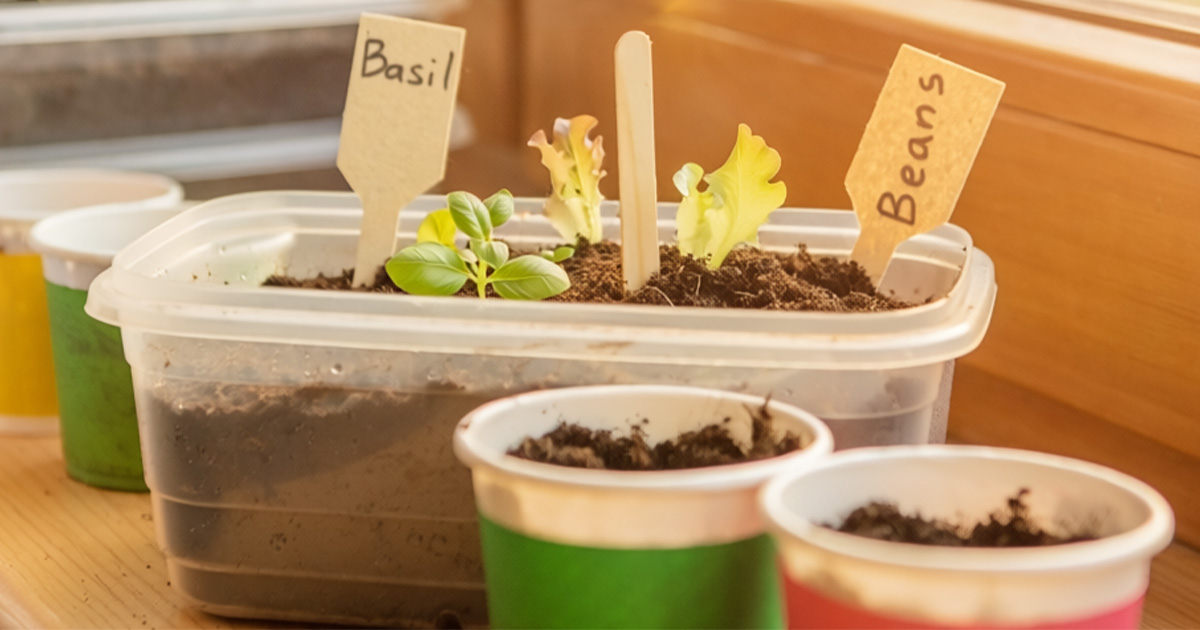
Creating a windowsill garden at home
This simple activity turns an everyday moment into something meaningful, and it doesn’t require much to get started.
Here’s what you’ll need:
- A recycled container (yogurt cup, food container, or small pot)
- Potting soil
- Seeds (beans, lettuce, basil, or herbs grow quickly)
- Water
- A sunny window
- Optional: craft stick and marker for labeling
Follow these steps:
- Prepare the container. If possible, poke a small hole in the bottom for drainage.
- Add soil. Fill the container about ¾ full to leave room for planting and watering. Invite your child to touch, smell, and describe it.
- Plant the seeds. Place seeds gently on top, then cover lightly. Talk about what the seeds will need to grow successfully.
- Water it together. Pour a small amount of water over the top. Discuss using “just what we need” to conserve resources and nourish the plant.
- Find a sunny spot. Place the container near a sunny window. Decide together whose job it will be to check the plant each day.
- Pause and wonder. Ask simple open-ended questions:
- What do you notice today?
- Did anything change?
- What do you think will happen next?
- Care and connect. As the plant grows, talk about how caring for plants helps the Earth and provides sustainable access to food.
Celebrating Earth Day all year long
Learning tied to Earth Day doesn’t have to be a big ordeal because it happens in small moments: turning off lights, reusing materials for art, planting flowers, or watering a tiny plant. When children are invited to wonder, explore, and care for the world around them, they begin developing lifelong habits rooted in respect and responsibility. And sometimes, it starts with something as simple as a tiny seed and a little time together.
Happy Earth Day—today and every day!
About the Author
Amber Clark, Education Specialist

Amber Clark is passionate about helping young children and families thrive. She holds a master's degree in Educational Business Administration and is part of the Learning Care Education Team. Throughout her career, Amber has worked closely with teachers, school leaders, and families across a variety of early learning settings, including Montessori programs and schools serving children of military families. She is committed to creating high-quality, nurturing environments where children feel safe, confident, and excited to learn.